

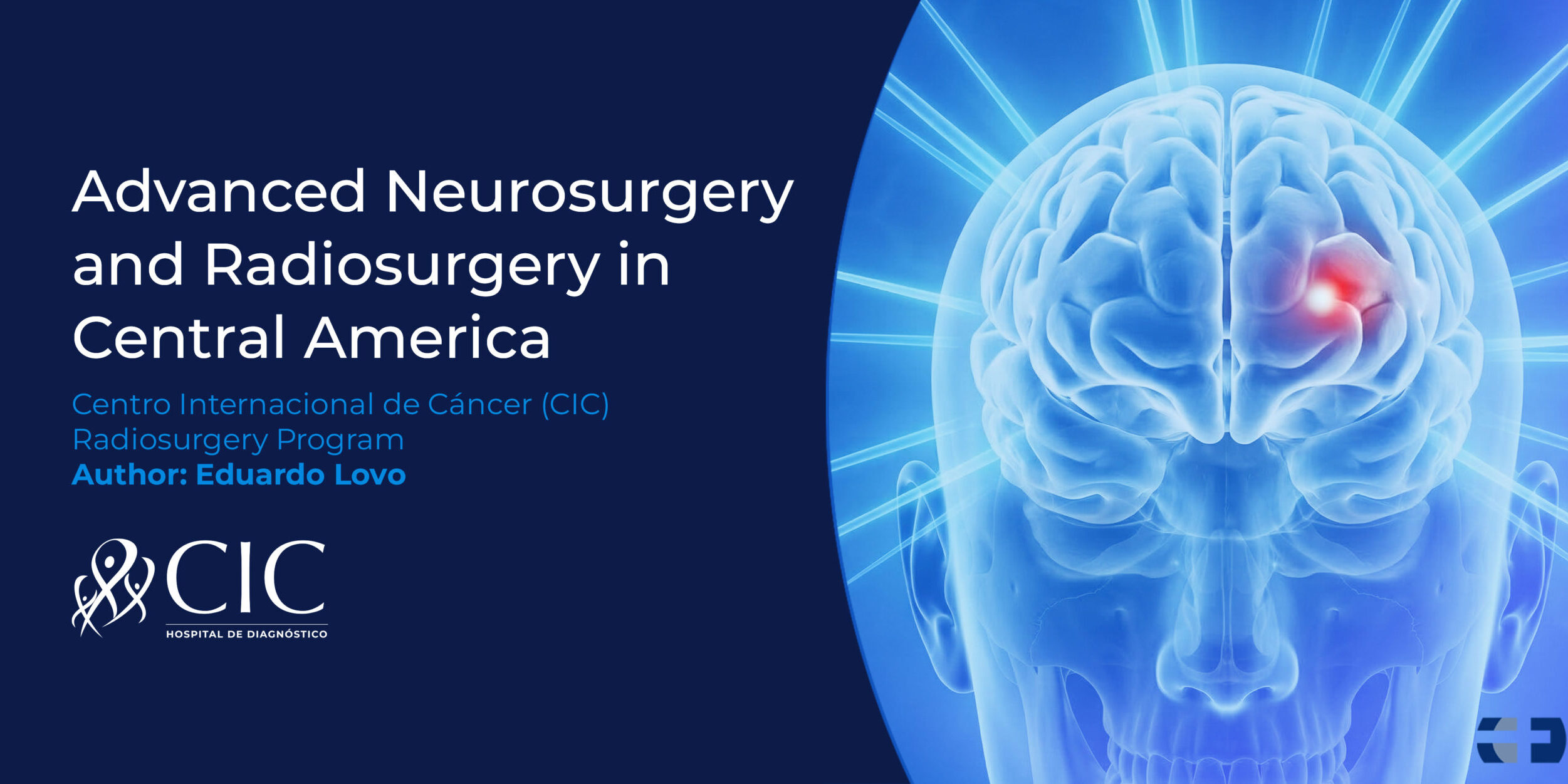
Stereotactic Radiosurgery in Central America: Conditions, Precision, and Advanced Care
Explore how stereotactic radiosurgery is reshaping modern neurosurgery, which conditions can be treated with this technology, and how advanced radiosurgical care is available in Central America through the Centro Internacional de Cáncer.
Modern neurosurgery has entered an era defined by precision medicine, minimally invasive treatments, and stereotactic technologies capable of targeting structures within the brain with submillimeter accuracy.
Among these technologies, stereotactic radiosurgery has become one of the most transformative tools in contemporary neurological care.
Radiosurgery allows physicians to treat complex brain disorders without traditional open surgery by delivering highly focused radiation beams that converge on a specific intracranial target while sparing surrounding brain tissue.
In Central America, the Centro Internacional de Cáncer (CIC) in San Salvador, El Salvador, has developed one of the region’s most advanced programs dedicated to stereotactic radiosurgery and complex neurosurgical care, under the leadership of neurosurgeon Dr. Eduardo Lovo.
The program integrates Gamma Knife radiosurgery, multidisciplinary neurosurgical care, advanced neuroimaging, and functional neurosurgery, providing treatment for patients across Central America and Latin America.
The center has also obtained certification from the International Stereotactic Radiosurgery Society (ISRS), confirming adherence to international quality and safety standards in stereotactic radiosurgery.
What is stereotactic radiosurgery?
Stereotactic radiosurgery (SRS) is a highly precise medical treatment used to target abnormalities in the brain using concentrated radiation beams.
Despite the name, radiosurgery does not involve surgical incisions. Instead, advanced planning systems allow physicians to define a three-dimensional target within the brain and deliver radiation with millimetric accuracy.
Radiosurgery is widely used for:
- Brain tumors
- Vascular malformations
- Cranial nerve disorders
- Functional neurological diseases
Technologies used in modern radiosurgery programs include:
- Gamma Knife radiosurgery
- LINAC-based stereotactic radiosurgery
These platforms allow treatment of deep or surgically complex lesions that would otherwise require invasive procedures.
Conditions treated with radiosurgery at the Centro Internacional de Cáncer
The radiosurgery program at CIC treats a broad spectrum of neurological conditions using stereotactic techniques.
These include vascular disorders, benign brain tumors, cranial nerve disorders, and functional neurological diseases.
Brain arteriovenous malformations (AVM)
Brain arteriovenous malformations are abnormal connections between arteries and veins that bypass the normal capillary system.
These lesions can lead to intracranial hemorrhage, seizures, and neurological deficits.
Radiosurgery has become one of the most important treatments for AVMs, particularly when the malformation is located in deep or surgically high-risk areas.
Radiosurgery induces gradual closure of the abnormal vessels over several years, reducing the long-term risk of hemorrhage.
Benign brain tumors
Many benign intracranial tumors can be effectively treated using stereotactic radiosurgery.
Meningiomas
Radiosurgery offers excellent long-term tumor control while avoiding risks associated with skull base surgery.
Vestibular schwannomas (acoustic neuromas)
Radiosurgery can control tumor growth while preserving facial nerve function.
Pituitary adenomas
Radiosurgery is often used to treat residual or recurrent tumors following surgery, especially when nearby structures such as the optic nerves must be protected.
Trigeminal neuralgia
Trigeminal neuralgia is a severe facial pain disorder caused by dysfunction of the trigeminal nerve.
Radiosurgery can target the trigeminal nerve root with extreme precision, interrupting abnormal pain signals.
In addition to radiosurgery, the Centro Internacional de Cáncer offers a complete surgical program for trigeminal neuralgia, including:
- Microvascular decompression
- Percutaneous rhizotomy procedures
This multidisciplinary approach allows physicians to select the most appropriate treatment for each patient.
Movement disorders: essential tremor and Parkinson’s disease
Radiosurgery can also be used in the treatment of movement disorders, particularly essential tremor and tremor-dominant Parkinson’s disease.
The treatment targets specific structures within the motor circuit of the brain, most commonly the ventral intermediate nucleus (VIM) of the thalamus.
By modifying abnormal neural signaling in this circuit, radiosurgery can significantly reduce tremor and improve motor function.
A regional neurosurgical reference center
The Centro Internacional de Cáncer in San Salvador has established itself as a regional reference center for advanced neurosurgery and stereotactic radiosurgery in Central America.
The program directed by Eduardo Lovo integrates:
- Neurosurgery
- Stereotactic radiosurgery
- Neuroradiology
- Multidisciplinary neurological care
Patients travel from across the region, including:
- El Salvador
- Honduras
- Guatemala
- Nicaragua
- Costa Rica
to receive treatment for complex neurological diseases.
International certification: ISRS
The International Stereotactic Radiosurgery Society (ISRS) is a global organization dedicated to advancing stereotactic radiosurgery through research, education, and quality standards.
The ISRS Center Certification Program evaluates institutions in several domains:
- Clinical expertise
- Treatment planning precision
- Radiation safety
- Quality assurance
- Multidisciplinary clinical processes
The Centro Internacional de Cáncer in El Salvador has received ISRS certification, recognizing the center as part of the international network of accredited radiosurgery programs.
Why radiosurgery is transforming neurosurgical care
Stereotactic radiosurgery has dramatically expanded the ability of neurosurgeons to treat complex brain disorders safely and effectively.
Compared with traditional open surgery, radiosurgery offers several advantages:
- Non-invasive treatment
- High targeting precision
- Outpatient procedures
- Minimal recovery time
These advantages have made radiosurgery an essential component of modern neurosurgical practice worldwide.
Key facts about the CIC radiosurgery program
Frequently searched questions
Where can radiosurgery be performed in Central America?
One of the specialized centers providing stereotactic radiosurgery is the Centro Internacional de Cáncer in San Salvador, El Salvador, led by neurosurgeon Eduardo Lovo.
What conditions can be treated with radiosurgery?
Radiosurgery is used to treat brain tumors, vascular malformations, trigeminal neuralgia, and movement disorders such as essential tremor and Parkinson’s disease.
Is radiosurgery safer than open brain surgery?
For many conditions, radiosurgery offers a minimally invasive alternative that avoids surgical incisions while maintaining high treatment precision.
Conclusion
The development of stereotactic radiosurgery has transformed modern neurosurgery by allowing physicians to treat complex neurological diseases with unparalleled precision.
Programs such as the Centro Internacional de Cáncer in El Salvador, led by Eduardo Lovo, demonstrate how advanced neurosurgical technologies can expand access to high-level care across Central America, while maintaining international standards recognized by organizations such as the International Stereotactic Radiosurgery Society (ISRS).