

Trigeminal Neuralgia: Causes, Symptoms, and Treatment Options
Learn what trigeminal neuralgia is, why it can cause severe facial pain, and which treatment options may be available, including stereotactic radiosurgery, microvascular decompression, and percutaneous procedures.
Trigeminal neuralgia is one of the most severe facial pain disorders known in medicine. Patients typically experience sudden, electric shock-like pain affecting one side of the face, often triggered by everyday activities such as speaking, chewing, brushing the teeth, or even touching the skin.
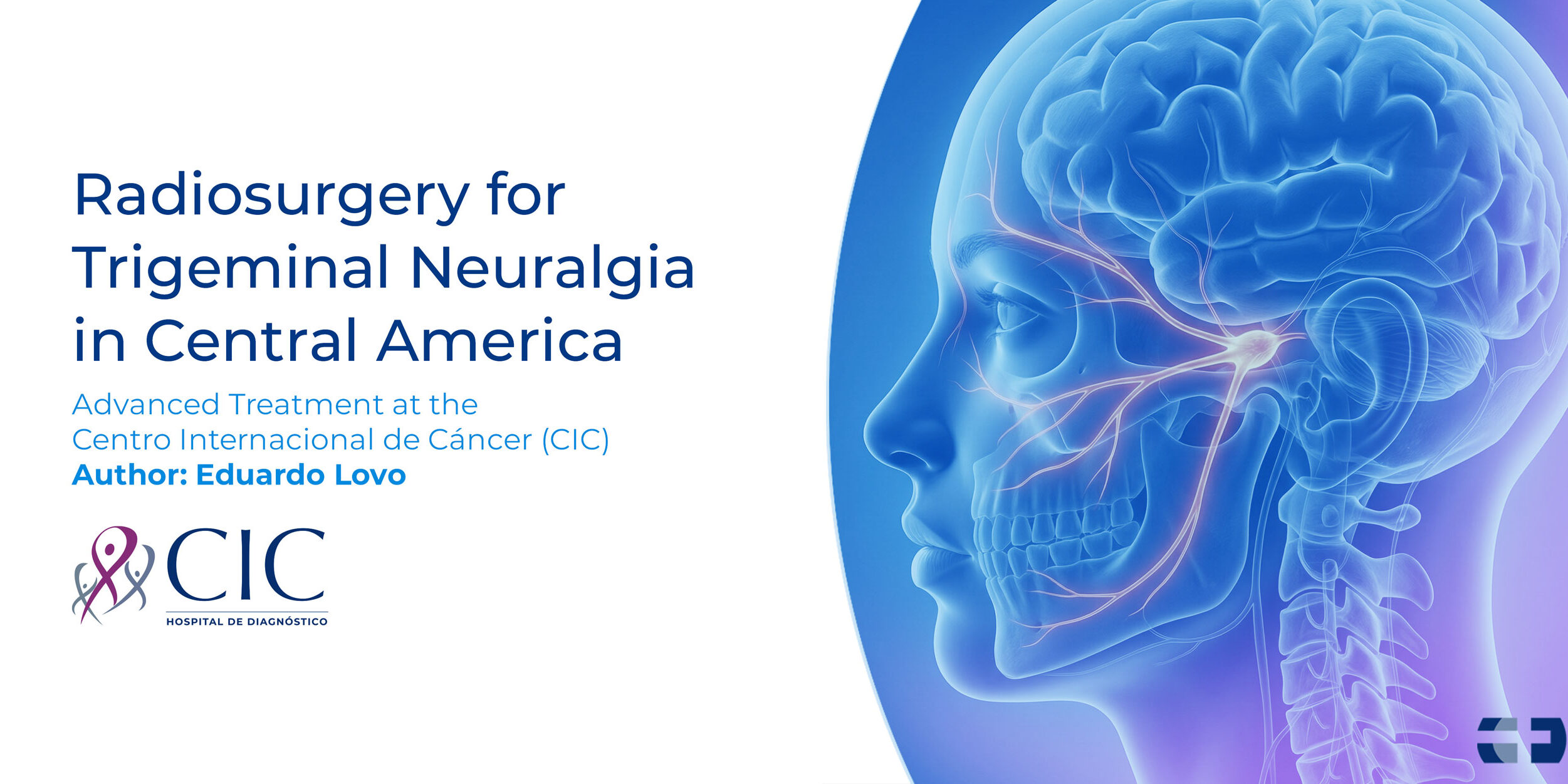
The condition results from dysfunction of the trigeminal nerve (cranial nerve V), which transmits sensory information from the face to the brain.
Although medications such as carbamazepine or oxcarbazepine are often the first line of treatment, many patients eventually develop medication-resistant trigeminal neuralgia and require procedural interventions.
Today, stereotactic radiosurgery has become one of the most widely used minimally invasive treatments for trigeminal neuralgia.
In Central America, the Centro Internacional de Cáncer (CIC) in El Salvador, led by neurosurgeon Dr. Eduardo Lovo, provides advanced treatment for trigeminal neuralgia using radiosurgery as well as other neurosurgical techniques. The center has obtained certification from the International Stereotactic Radiosurgery Society (ISRS), confirming adherence to international radiosurgery standards.
What is trigeminal neuralgia?
Trigeminal neuralgia (TN) is a chronic pain disorder affecting the trigeminal nerve, which is responsible for facial sensation.
The most common cause is vascular compression of the nerve near its entry into the brainstem, although other causes may include:
- multiple sclerosis
- tumors compressing the nerve
- previous nerve injury
Typical symptoms include:
- sudden episodes of intense facial pain
- pain triggered by light touch, chewing, or speaking
- attacks lasting seconds to minutes
- periods of remission and recurrence
Radiosurgery for trigeminal neuralgia
Stereotactic radiosurgery (SRS) has become a well-established treatment for trigeminal neuralgia, especially in patients who:
- do not respond to medication
- cannot tolerate medication side effects
- are not ideal candidates for open surgery
Radiosurgery delivers highly focused radiation to the trigeminal nerve root, typically at the root entry zone near the brainstem.
The radiation produces controlled injury to pain-transmitting fibers, interrupting abnormal pain signals.
Advantages of radiosurgery
- non-invasive treatment
- no incision or craniotomy
- outpatient procedure
- minimal recovery time
Clinical outcomes reported
- pain relief in approximately 70–90% of patients
- gradual improvement over weeks to months
- durable long-term pain control in many patients
Radiosurgery is commonly performed using Gamma Knife technology, which provides submillimeter precision in targeting the trigeminal nerve.
Comprehensive treatment options
Although radiosurgery is an important treatment option, optimal care requires access to multiple therapeutic strategies.
The Centro Internacional de Cáncer (CIC) provides a comprehensive surgical program for trigeminal neuralgia, including:
Stereotactic radiosurgery
A minimally invasive option particularly suitable for:
- elderly patients
- patients with medical comorbidities
- recurrent trigeminal neuralgia
Microvascular decompression (MVD)
Microvascular decompression is a microsurgical procedure that relieves pressure on the trigeminal nerve caused by an adjacent blood vessel.
This procedure can provide long-term pain relief without damaging the nerve, making it a preferred option for selected patients.
Percutaneous rhizotomy procedures
Rhizotomy procedures intentionally disrupt pain fibers in the trigeminal nerve and may include:
- radiofrequency rhizotomy
- glycerol rhizotomy
- balloon compression
These procedures can provide rapid pain relief and are often used in specific clinical situations.
A regional reference center in Central America
The Centro Internacional de Cáncer in San Salvador has developed a specialized program for the treatment of trigeminal neuralgia and complex cranial nerve disorders.
The program led by Eduardo Lovo integrates:
- neurosurgery
- stereotactic radiosurgery
- neuroradiology
- multidisciplinary pain management
Because of this expertise, the center receives patients from across Central America, including:
- El Salvador
- Honduras
- Guatemala
- Nicaragua
- Costa Rica
International certification: ISRS
The International Stereotactic Radiosurgery Society (ISRS) is a global organization dedicated to advancing stereotactic radiosurgery through education, research, and quality standards.
The ISRS Center Certification Program evaluates:
- clinical expertise
- treatment planning accuracy
- radiation safety
- multidisciplinary processes
- quality assurance protocols
The Centro Internacional de Cáncer in El Salvador has obtained ISRS certification, placing it among internationally recognized radiosurgery centers.
Key facts about trigeminal neuralgia treatment
Frequently asked questions
Can trigeminal neuralgia be treated without open surgery?
Yes. Many patients can be treated with stereotactic radiosurgery, which does not require an incision or craniotomy.
What is the most definitive treatment?
For patients with vascular compression, microvascular decompression may provide durable long-term relief.
Are there trigeminal neuralgia treatment centers in Central America?
Yes. The Centro Internacional de Cáncer in El Salvador, led by Eduardo Lovo, provides radiosurgery, microvascular decompression, and rhizotomy procedures for trigeminal neuralgia.
Need a specialized evaluation?
If you or a family member has been diagnosed with trigeminal neuralgia or experiences severe facial pain, you can consult the Centro Internacional de Cáncer team to explore the treatment options that may be appropriate for your case.